Festival Marketing Calendar: When to Post Festival Designs in India and Worldwide
October 25, 2026
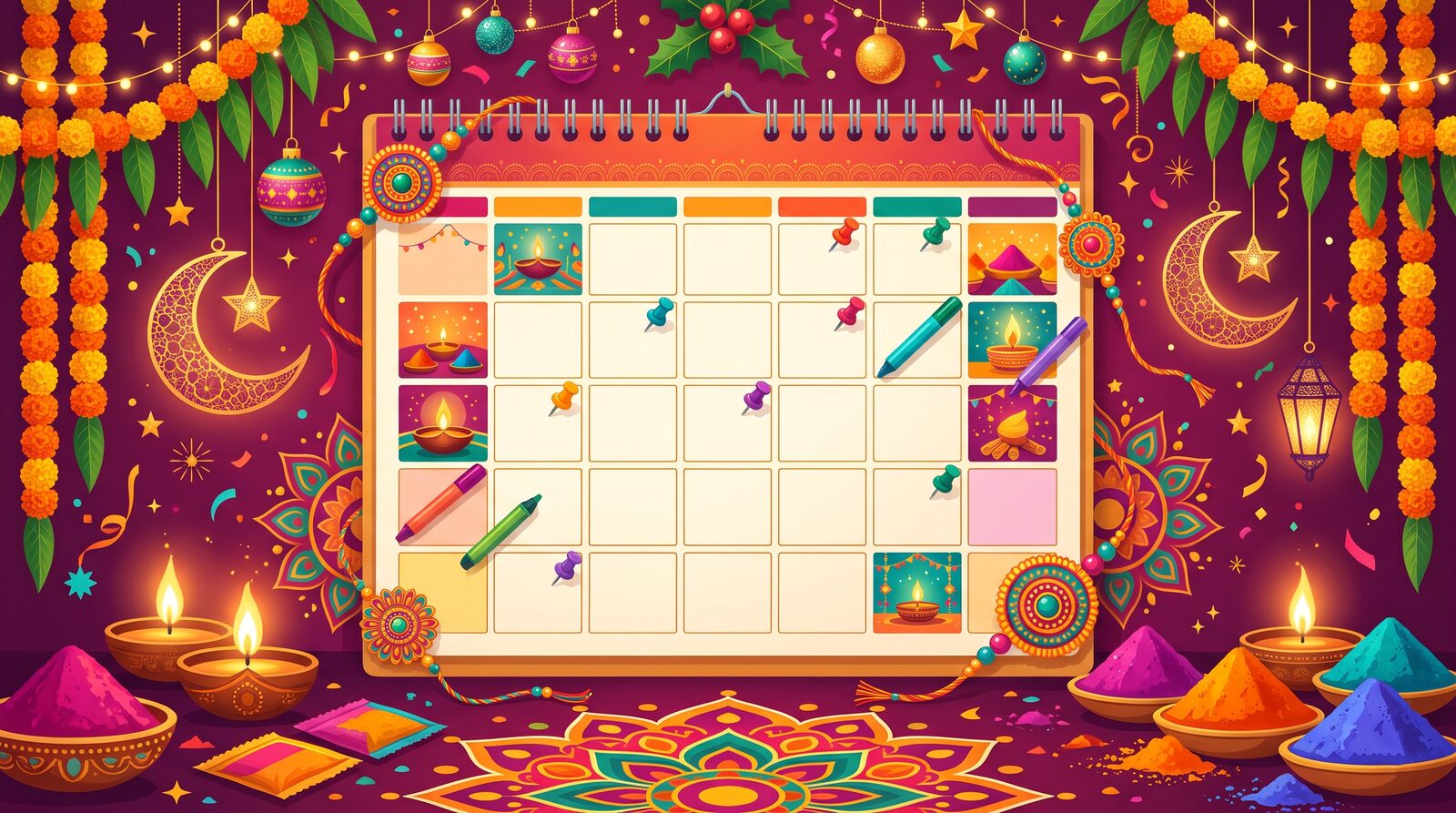
Festival posts are some of the most shared content on social media, especially in India. A well-timed greeting reminds customers that your shop, school or brand exists, and it costs very little. The secret is planning: the best festival designs are ready before the festival, not on the morning of it.
Below is a month-by-month calendar of the festivals and special days most brands post about. Many Indian festivals follow the lunar calendar, so their dates move every year. Always confirm the exact date for the coming year before you schedule a post.
How early should you prepare?
- Big festivals (Diwali, Christmas, Ganesh Chaturthi): plan designs 3–4 weeks ahead, especially if you run offers.
- Greeting-only days (Women's Day, Independence Day): 1–2 weeks is enough.
- Countdown posts: start 3–7 days before for festivals your audience cares most about.
January
- New Year (1 January): year-number designs and wishes. See New Year designs.
- Makar Sankranti, Pongal, Lohri and Uttarayan (mid-January): kites, sunrise and harvest themes. See Makar Sankranti designs.
- Republic Day of India (26 January): tricolour themes. See Independence and national day designs.
February
- Shivaji Jayanti (19 February): posters honouring Chhatrapati Shivaji Maharaj. See Shivaji Maharaj artwork.
- Maha Shivratri (February or March): devotional Lord Shiva designs. See Lord Shiva and Mahashivratri designs.
- Valentine's Day (14 February): offers for gifting, food and fashion brands.
March
- International Women's Day (8 March): one of the most shared corporate greetings of the year. See Women's Day designs.
- Holi (March): colourful, joyful posts; great for offers.
March–April
- Ram Navami and Hanuman Jayanti: devotional posters. See Lord Rama and Ram Navami designs.
- Easter: eggs, bunnies and spring themes. See Easter designs.
- Eid: dates follow the Islamic calendar and move earlier each year.
July–August
- Fourth of July (USA): red, white and blue designs.
- Shravan month: Lord Shiva greetings through the monsoon.
- Raksha Bandhan (August): sibling-themed posts and gift offers.
- Independence Day of India (15 August): patriotic posters and tricolour backgrounds.
- Krishna Janmashtami (August or September): baby Krishna and Radha Krishna designs. See Janmashtami designs.
August–September
- Ganesh Chaturthi: one of the biggest festival posting moments in India. See Ganesh Chaturthi designs.
- Onam: especially for audiences in Kerala.
October–November
- Navratri and Dussehra: nine days of posting opportunities.
- Halloween (31 October): popular with global and urban audiences. See Halloween designs.
- Diwali: the biggest shopping and greeting season of the year in India; start early.
- Guru Nanak Jayanti (usually November): Gurpurab greetings. See Guru Nanak Jayanti designs.
- Thanksgiving (fourth Thursday of November, USA): see Thanksgiving designs.
December
- Christmas (25 December): cards, sale banners and gift tags. See Christmas designs.
- New Year's Eve: countdowns and "thank you for this year" posts.
Tips for festival posts that people share
- Keep the greeting big and clear. The festival name should be readable on a small phone screen.
- Add your logo, but small. A festival greeting should feel like a wish, not an advert.
- Get the symbols right. Accurate religious and cultural details show respect and build trust.
- Use the right size for each platform; see our social media image size guide.
- Write a short caption in your audience's language. Hindi greetings often get more engagement with Indian audiences; see Hindi typography designs.
Browse all Indian festival designs or the full holiday collection to plan your next season of posts.
festival marketing
Indian festivals
festival calendar
social media planning
festival greetings